

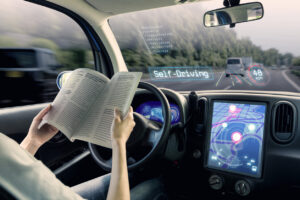
Self-driving cars are legal under Pennsylvania law. Unlike many states, Pennsylvania even allows driverless vehicles to be tested and deployed on the Commonwealth’s roads. As autonomous and semi-autonomous vehicles become more common, though, an increase in self-driving car accidents in York, PA, is likely to follow.
Liability for car accidents in Pennsylvania generally follows the same legal principles, whether a vehicle is self-driving or operated by a human driver. There are unique considerations to weigh along the way, however. A York self-driving car accident lawyer from Marzzacco Niven & Associates can help you identify your legal options after a self-driving car crash. Contact us today at (717) 995-8998 for a free consultation with one of our experienced attorneys.
How Marzzacco Niven & Associates Can Help After a Self-Driving Car Accident in York, PA
Marzzacco Niven & Associates was founded to help accident victims throughout York, Pennsylvania, fight for the compensation they deserve for their injuries. We have over 120 years of combined experience handling car accident cases and other injury claims.
When you suffer an injury in a crash that was not your fault, our York car accident lawyers can provide you with services like these:
- Identifying your legal claims, including claims against self-driving vehicle manufacturers
- Gathering evidence to support your case, such as expert witness testimony
- Preparing your insurance claim and negotiating to settle it fairly
- Filing a lawsuit if a fair settlement isn’t possible
Car accidents can cause serious physical injuries and high financial costs, regardless of whether the vehicle had a driver. Contact us to schedule a free consultation with a York personal injury attorney from our team to discuss your crash and the legal rights you may have under Pennsylvania law.
Levels of Autonomous Driving
Understanding autonomous driving systems is essential to analyzing how these crashes occur and what parties may be responsible for them. The levels are:
- Driver assistance (lowest levels): At the most basic levels, autonomous features are limited to assisting the driver. These systems provide alerts or minor interventions, such as lane departure warnings, that help prevent unintended lane changes. The driver remains fully in control of the vehicle at all times.
- Partial automation (middle levels): At intermediate levels, the vehicle can take control in certain situations, but the driver is still primarily responsible for operating the car. For example, a vehicle may automatically brake using sensors to prevent a rear-end collision. However, the driver must remain engaged and ready to intervene.
- Conditional automation (higher levels): At more advanced stages, the vehicle can operate independently under specific conditions. While the car may handle most driving tasks, a human driver must still be present, attentive, and prepared to take over if necessary.
- High to full automation (highest levels): At the highest levels, the vehicle is capable of full autonomous operation. In some cases, a driver may still be seated as a backup, but ultimately, fully autonomous vehicles do not require any human input or monitoring. Passengers are not expected to control the vehicle at all.
Under Pennsylvania law, all levels of operation are permitted, including fully autonomous operation. However, certification and compliance with traffic laws are still required.
How Self-Driving Car Accidents Can Occur in York
Understanding how self-driving car accidents occur in York can help clarify why these collisions happen and who may be responsible. While autonomous technology continues to improve, several common factors still contribute to crashes:
- Software and hardware failures: Self-driving vehicles rely on complex systems that are not yet flawless. Failures in software or physical components can lead to serious malfunctions and increase the risk of accidents.
- Sensor and processing errors: Autonomous vehicles depend on sensors to detect their surroundings and software to interpret that data. Errors in sensing road conditions, processing information, or executing driving decisions can result in collisions with pedestrians, bicyclists, other vehicles, or fixed objects.
- System mistakes similar to human error: These technological failures can mirror common driver mistakes. For example, a self-driving car might run a red light or fail to detect a pedestrian in a crosswalk.
- Driver failure to take control: In vehicles that require human oversight, accidents can occur when drivers fail to intervene. Some drivers mistakenly treat partially autonomous systems as fully self-driving, leading to delayed reactions or no response at all.
- Driver misuse due to distraction or inattention: Drivers may become distracted, complacent, or disengaged while using autonomous features. This misuse can prevent them from taking over when necessary, increasing the likelihood of a crash.
As self-driving technology evolves, addressing both system limitations and human behavior will be essential to reducing the risk of these types of accidents.
Liability For Self-Driving Car Accidents Under Pennsylvania Law
Determining liability for self-driving car accidents under Pennsylvania law depends on identifying the cause of the crash. Responsibility may fall on different parties depending on the circumstances, including:
- Negligent third-party drivers: A self-driving vehicle may be struck by another driver acting negligently. In these situations, the at-fault driver may be liable for any resulting injuries or damages.
- Vehicle operator negligence: Even with autonomous features, human drivers may still have legal responsibilities. If an operator fails to monitor the vehicle or does not take control when required, they may be held liable under Pennsylvania negligence laws.
- Failure to intervene during malfunctions: If a self-driving system malfunctions or violates traffic laws, the operator is expected to step in. Failing to do so can result in liability.
- Manufacturer liability for defective products: When a crash is caused by a defect in the vehicle’s design or software, the manufacturer may be held responsible under product liability law.
- Software or design defects: This includes issues such as coding errors, sensor failures, or flawed system design. Manufacturers may be liable for accidents caused by these defects, even if they were unaware of the issue.
Because these cases often involve both human behavior and advanced technology, determining liability typically requires a detailed investigation.
Contact Our York, PA, Accident Lawyers for a Free Consultation
Self-driving car accidents may become more common as vehicle manufacturers adopt greater levels of automation. It’s important to know your rights if you experienced one of these crashes in York, Pennsylvania. Contact Marzzacco Niven & Associates for a free consultation with a York self-driving car accident attorney to discover how we can help you seek the compensation you deserve today.